


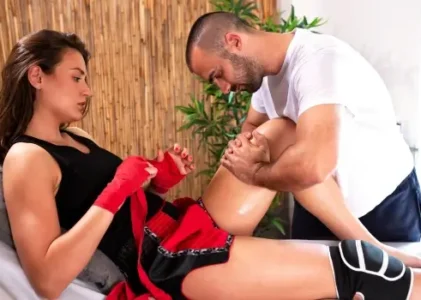
Recovery is not passive. The hours and days after a hard training session are when adaptation actually happens, when muscle tissue repairs, when the nervous system recalibrates, and when the body converts stress into fitness. What you do in that window determines how fully you recover and how ready you are for the next session. Massage is one of the most effective active recovery tools available, and understanding what it actually does inside the body helps you use it more intelligently.
How Massage Accelerates Muscle Recovery
When you train hard, your muscles accumulate metabolic byproducts: lactate, hydrogen ions, inflammatory mediators, and other waste products generated by the energy systems working at high intensity. These byproducts contribute to the soreness, heaviness, and reduced force production you feel in the hours and days following a hard effort. The faster your body clears them, the faster you recover.
Massage accelerates this clearance by increasing local blood flow and lymphatic circulation in the treated tissue. More blood flow means faster delivery of oxygen and nutrients to recovering cells, and faster removal of the waste products that slow recovery. Research on massage and delayed-onset muscle soreness consistently shows that massage reduces the severity and duration of post-exercise soreness, particularly when applied in the hours following a training session.
Beyond circulatory effects, massage works on the fascial network surrounding the muscles. Hard training creates micro-trauma in muscle fibers that, as it heals, can leave behind adhesions in the fascia, areas where connective tissue layers stick together and lose their normal glide. These adhesions restrict movement, reduce power output, and create the chronic stiffness that accumulates over a training season. Massage addresses these restrictions directly, restoring the tissue mobility that training progressively diminishes.
The Nervous System Dimension of Recovery
Physical tissue repair is only part of recovery. The nervous system needs to recover too, and this is an area where massage has effects that are often overlooked.
Intense training keeps the body in a sympathetically activated state, characterized by elevated cortisol, heightened alertness, and a muscle tone that stays higher than resting levels. This is appropriate during training. When it persists too long afterward, it impairs the tissue repair and hormonal responses that adaptation depends on.
Massage activates the parasympathetic nervous system, the physiological state associated with rest, repair, and recovery. Heart rate slows. Cortisol levels drop. Resting muscle tone decreases. The body shifts from performance mode into the state where the actual work of rebuilding happens. For athletes who train frequently and live busy lives outside of sport, this parasympathetic shift is one of the most valuable things a post-workout massage provides.
When to Get a Post Workout Massage
Timing affects how much benefit you get from massage in the context of post-workout recovery.
In the hours immediately following a hard session, lighter, more circulatory massage work is well suited to the tissue state. The muscles are still in an acute inflammatory phase, and aggressive deep tissue work in this window can feel counterproductive. Techniques focused on flushing circulation and calming the nervous system are more appropriate in the first few hours after training.
In the one to three days following a hard session, as acute inflammation subsides and the tissue moves into the repair phase, deeper myofascial and trigger point work becomes more appropriate and more effective. This is when the adhesions and trigger points that developed during training are accessible and responsive to therapeutic work.
For athletes training at high volume, scheduling a post-workout massage session within this window consistently, rather than only when soreness becomes severe, produces the most meaningful cumulative benefit. Recovery is a habit, not a crisis response.
Integrating Massage Into Your Training Plan
The most effective approach to post-workout massage is treating it as a regular part of training rather than an occasional luxury. Just as you plan your training sessions, your rest days, and your nutrition, planning your massage schedule around your training load gives you the best chance of managing recovery proactively rather than reactively.
Athletes who integrate massage consistently into their training plans report not just faster recovery between sessions but a reduction in the chronic tension patterns that accumulate over a training season and a better overall sense of how their body is responding to training load. That awareness, built through regular contact with a skilled therapist, is itself a performance advantage.